Utrecht sets new Standards for Urban Logistics and Emission-Free Transport
Starting May 1, 2026, the city of Utrecht is pivoting toward a greener future. By introducing new access regulations for its historic city center, Utrecht is taking a decisive step toward emission-free and streamlined city logistics.
New Access Windows: The Morning rush
From May onwards, access for traditional delivery vehicles will be limited to a short time window. Deliveries will only be allowed between 6:00 AM and 10:00 AM. After this, all vehicles must leave the area within the city canal.
To incentivize the shift toward sustainable fleets, electric delivery vehicles with special permits will have extended windows:
- Morning: 6:00 AM to 12:00 PM
- Evening: 7:00 PM to 9:00 PM
Cleaner Cities, Smarter Last-Mile Delivery
Utrecht’s decision reflects a broader shift across Europe. As city centers grow denser, traditional delivery vehicles are becoming a liability in narrow streets and busy pedestrian areas.
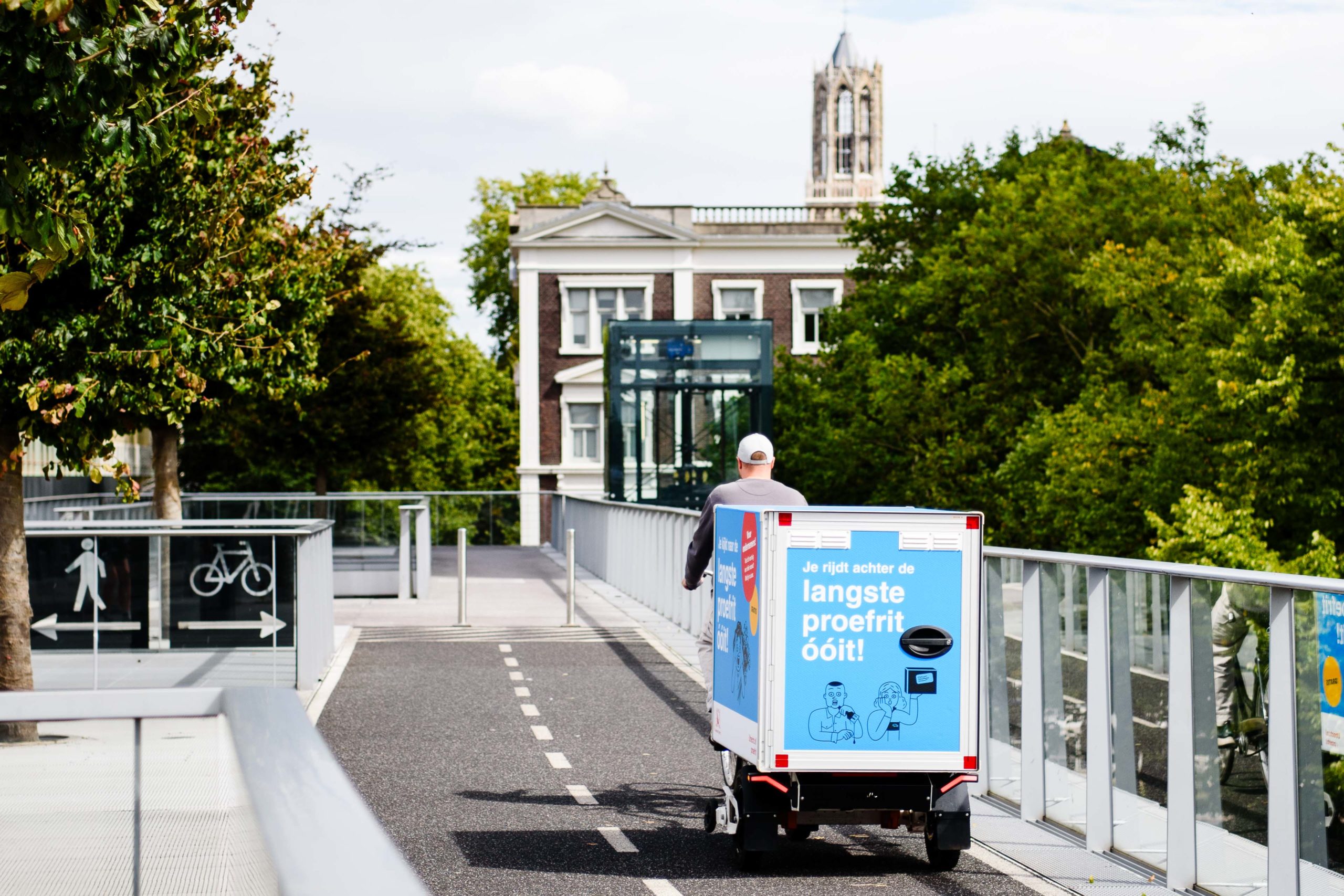
This is where electric cargo trailers, cargo bikes, and bike trailers come into play. These emission-free transport solutions offer a practical, agile alternative for last-mile delivery:
Compact: They navigate tight medieval alleys with ease.
Powerful: Electric motors allow them to carry heavy loads without breaking a sweat.
Compliant: They bypass many of the restrictions placed on heavy delivery vehicles, ensuring urban logistics remain uninterrupted.
The Rise of Microhubs and Waterborne freight
To support this transition, Utrecht is developing a network of urban consolidation hubs on the outskirts of the city. These hubs act as “transfer stations” where goods are moved from large trucks to smaller, more efficient modes such as cargo bikes, electric cargo trailers, and bike trailers. The goal is to reduce congestion and emissions while maintaining reliable service for local businesses, shops, restaurants, and residents.
In addition to land-based solutions, Utrecht is also expanding its iconic canals. Electric barges already supply waterfront restaurants and stores, and the city estimates that 30% of small-scale deliveries could soon be handled by a mix of boats, cargo bikes, and bike trailers for business.
A Glimpse into the Future of Urban Logistics
To help local companies adapt, Utrecht launched a pilot program in late 2025. This initiative allows businesses to test light electric delivery vehicles free of charge, proving that emission-free transport isn’t just a regulatory hurdle, it’s a competitive advantage for modern last-mile delivery. Utrecht’s approach offers a clear example of how cities can balance efficient logistics with livable public spaces.
The future of Utrecht isn’t just about cleaner engines; it’s about better public spaces. During peak hours (12:00 PM to 6:00 PM), certain zones will prioritize pedestrians entirely, even restricting standard cycling.
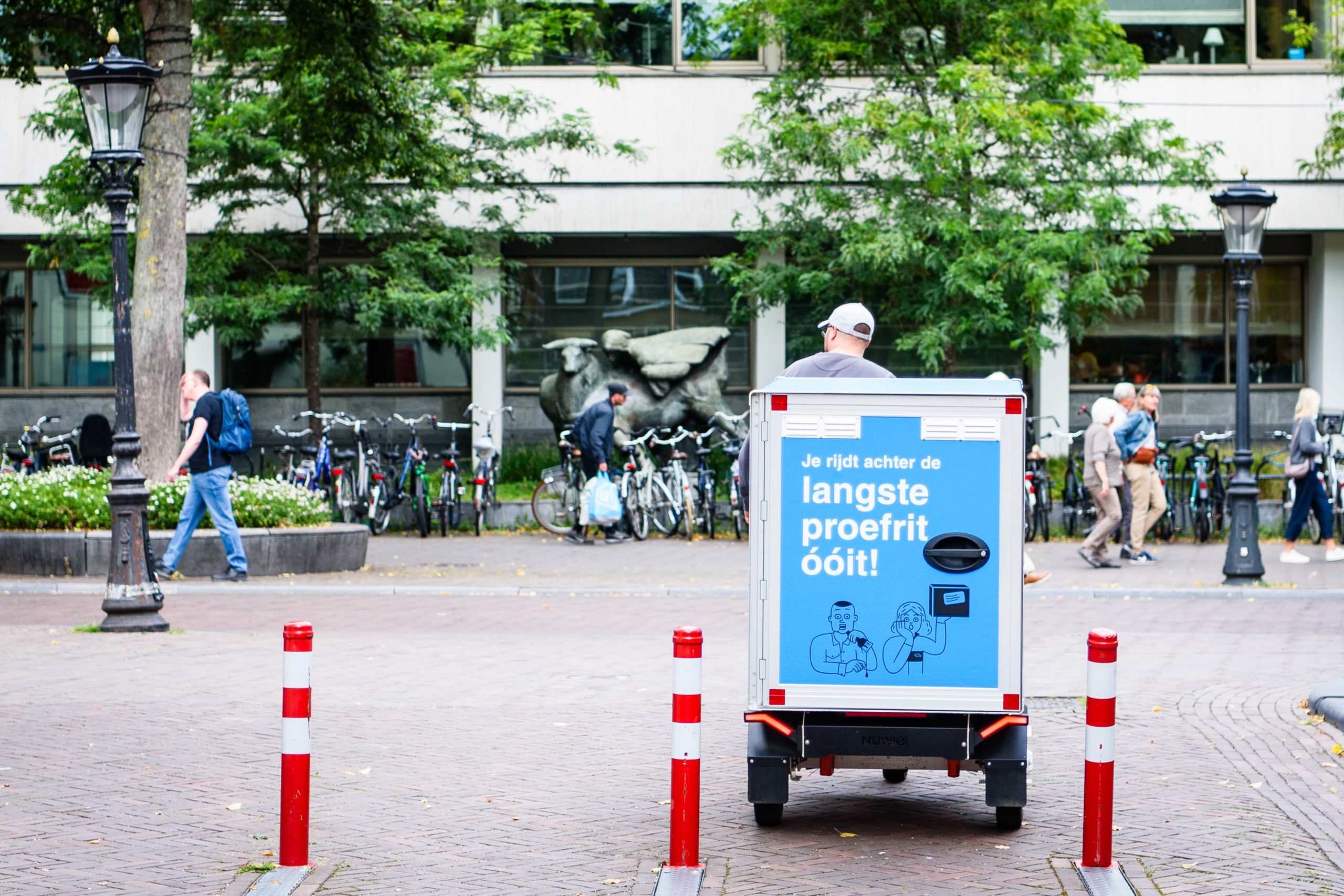
However, deliveries on foot using light equipment such as the NÜWIEL eTrailer delivery will still be possible, allowing goods to reach their destination even in fully pedestrianized areas.
By integrating cargo bikes, electric cargo trailers, and electric boats, Utrecht is proving that sustainable city life and efficient commerce can go hand-in-hand.
By integrating cargo bikes, e-trailers and electric boats into its delivery network, Utrecht proving that sustainable urban transport can also be practical, reliable, and well suited to the needs of modern city life.
Utrecht sets new Standards for Urban Logistics and Emission-Free Transport
Starting May 1, 2026, the city of Utrecht is pivoting toward a greener future. By introducing new access regulations for its historic city center, Utrecht is taking a decisive step toward emission-free and streamlined city logistics.
New Access Windows: The Morning rush
From May onwards, access for traditional delivery vehicles will be limited to a short time window. Deliveries will only be allowed between 6:00 AM and 10:00 AM. After this, all vehicles must leave the area within the city canal.
To incentivize the shift toward sustainable fleets, electric delivery vehicles with special permits will have extended windows:
- Morning: 6:00 AM to 12:00 PM
- Evening: 7:00 PM to 9:00 PM
Cleaner Cities, Smarter Last-Mile Delivery
Utrecht’s decision reflects a broader shift across Europe. As city centers grow denser, traditional delivery vehicles are becoming a liability in narrow streets and busy pedestrian areas.
This is where electric cargo trailers, cargo bikes, and bike trailers come into play. These emission-free transport solutions offer a practical, agile alternative for last-mile delivery:
Compact: They navigate tight medieval alleys with ease.
Powerful: Electric motors allow them to carry heavy loads without breaking a sweat.
Compliant: They bypass many of the restrictions placed on heavy delivery vehicles, ensuring urban logistics remain uninterrupted.
The Rise of Microhubs and Waterborne freight
To support this transition, Utrecht is developing a network of urban consolidation hubs on the outskirts of the city. These hubs act as “transfer stations” where goods are moved from large trucks to smaller, more efficient modes such as cargo bikes, electric cargo trailers, and bike trailers. The goal is to reduce congestion and emissions while maintaining reliable service for local businesses, shops, restaurants, and residents.
In addition to land-based solutions, Utrecht is also expanding its iconic canals. Electric barges already supply waterfront restaurants and stores, and the city estimates that 30% of small-scale deliveries could soon be handled by a mix of boats, cargo bikes, and bike trailers for business.
A Glimpse into the Future of Urban Logistics
To help local companies adapt, Utrecht launched a pilot program in late 2025. This initiative allows businesses to test light electric delivery vehicles free of charge, proving that emission-free transport isn’t just a regulatory hurdle, it’s a competitive advantage for modern last-mile delivery. Utrecht’s approach offers a clear example of how cities can balance efficient logistics with livable public spaces.
The future of Utrecht isn’t just about cleaner engines; it’s about better public spaces. During peak hours (12:00 PM to 6:00 PM), certain zones will prioritize pedestrians entirely, even restricting standard cycling.
However, deliveries on foot using light equipment such as the NÜWIEL eTrailer delivery will still be possible, allowing goods to reach their destination even in fully pedestrianized areas.
By integrating cargo bikes, electric cargo trailers, and electric boats, Utrecht is proving that sustainable city life and efficient commerce can go hand-in-hand.
By integrating cargo bikes, e-trailers and electric boats into its delivery network, Utrecht proving that sustainable urban transport can also be practical, reliable, and well suited to the needs of modern city life.